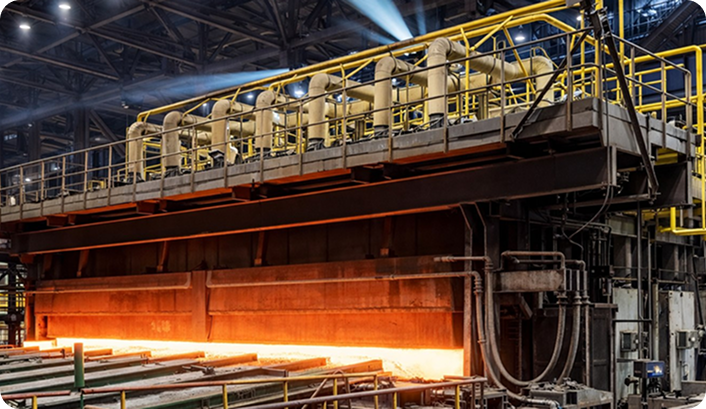
Design, development, and installation of a foam fire suppression system for rolling mill equipment
Developing effective fire suppression for rolling mill units
ABOUT THE PROJECT
1. A first in Russia
2. High efficiency
3. Minimal equipment damage
4. Semi-automatic operation
5. No production downtime
6. Does not require room sealing
7. Fire suppression within two minutes
8. Extended range of fire classes
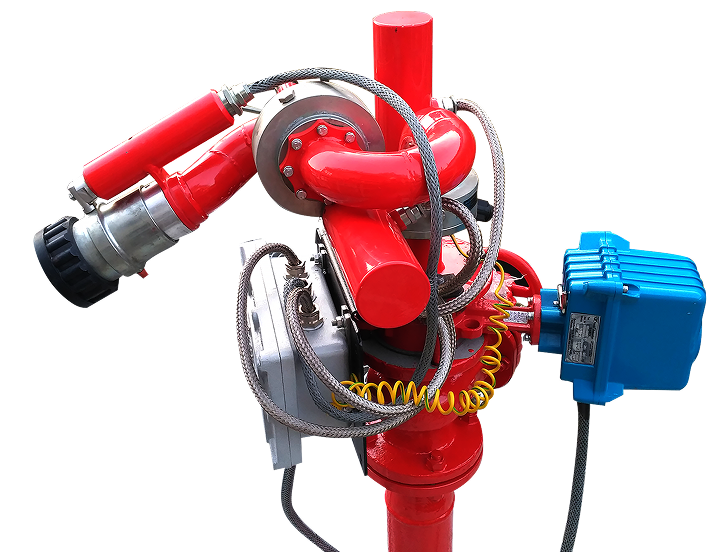
FUNCTIONS
Personnel protection
The foam fire suppression system automatically detects fire in the mill equipment zone and instantly discharges foam, without requiring personnel presence in the danger zone. This eliminates the risk of burns, smoke inhalation, or injuries during manual extinguishing. The foam is non-toxic, skin and respiratory safe, and creates no caustic smoke, allowing personnel to safely evacuate or commence recovery operations without additional protection. Response time is under 10 seconds, minimizing fire impact on individuals.
Preserving production
Unlike water-based suppression, which can disable electronics, hydraulics, and lubrication systems, foam is gentle on equipment. Rapid local suppression prevents fire spread to adjacent units (mill stands, roller tables, oil cellars). After system activation, one only needs to remove the foam and perform minimal drying; the mill returns to operation within hours, not weeks. This avoids multimillion-ruble losses from production downtime (stopping a mill for one day can cost tens of millions of rubles). Effect: reduction of recovery time to 4–6 hours vs 5–10 days with water or powder.
Effective fire suppression
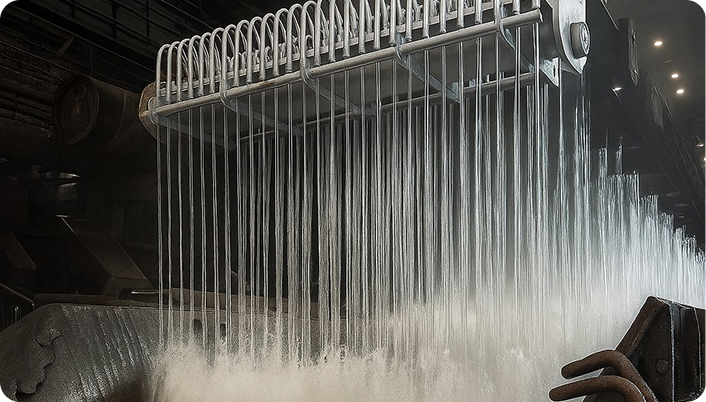
The system uses high-expansion foam that fully covers vertical and horizontal surfaces and penetrates hard-to-reach areas (under covers, bearing gaps, cable trays). The foam is 10–15 times lighter than water and does not drain instantly, creating an insulating layer that cuts off oxygen from the fire source. Even during severe oil or hydraulic fires, the system suppresses flames in 20–30 seconds without re-ignition. Foam agent consumption is 3–5 times lower than water, reducing operating and disposal costs. Result: suppression of any fire class (B – liquids, E – energized electrical equipment) with guaranteed elimination of the source before reaching critical size.
Client

Location
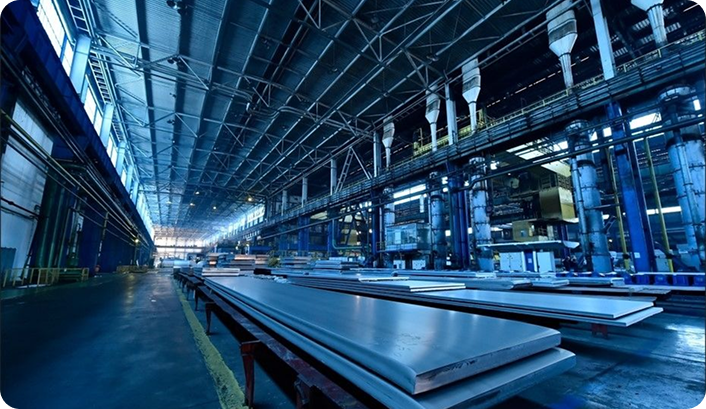
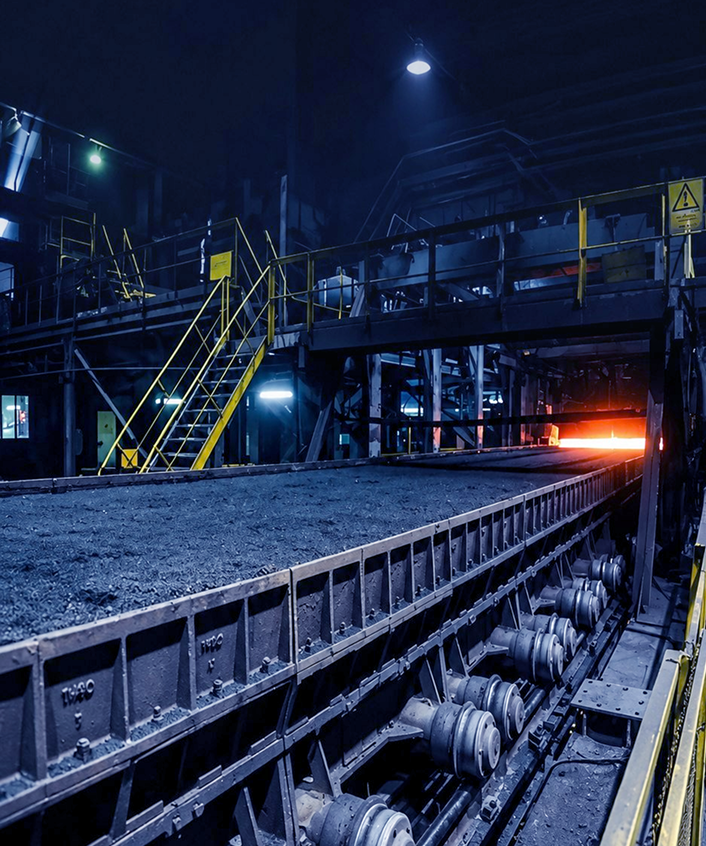
Rolling Shop No. 4: Mill 2500